Paper khata vs khata app
The paper notebook has served shops for generations. Here is an honest look at where it still works, where it causes trouble, and what a shared digital khata changes.
| Paper khata | Jotbello | |
|---|---|---|
| Adding up | By hand, every time | Automatic after every entry |
| Customer can check | Only at the counter | Any time, on their own phone |
| Disputes | Your word against theirs | Dispute one bill, with a reason and an answer |
| Corrections | Crossed out or overwritten | “Edited (1)” with the old amount and reason |
| Lost, wet or torn | Records are gone | Kept in your account |
| Reminders | A phone call | WhatsApp reminder with the full record |
| Privacy | Anyone at the counter can read it | Each customer sees only their own account |
| Cost | A notebook | Free for shops at launch |
Where paper still wins
Paper needs no phone, no battery and no learning. If you have five customers who all pay on time, keep your notebook. The moment balances start to drift or someone else collects goods for a family, a shared record pays for itself.
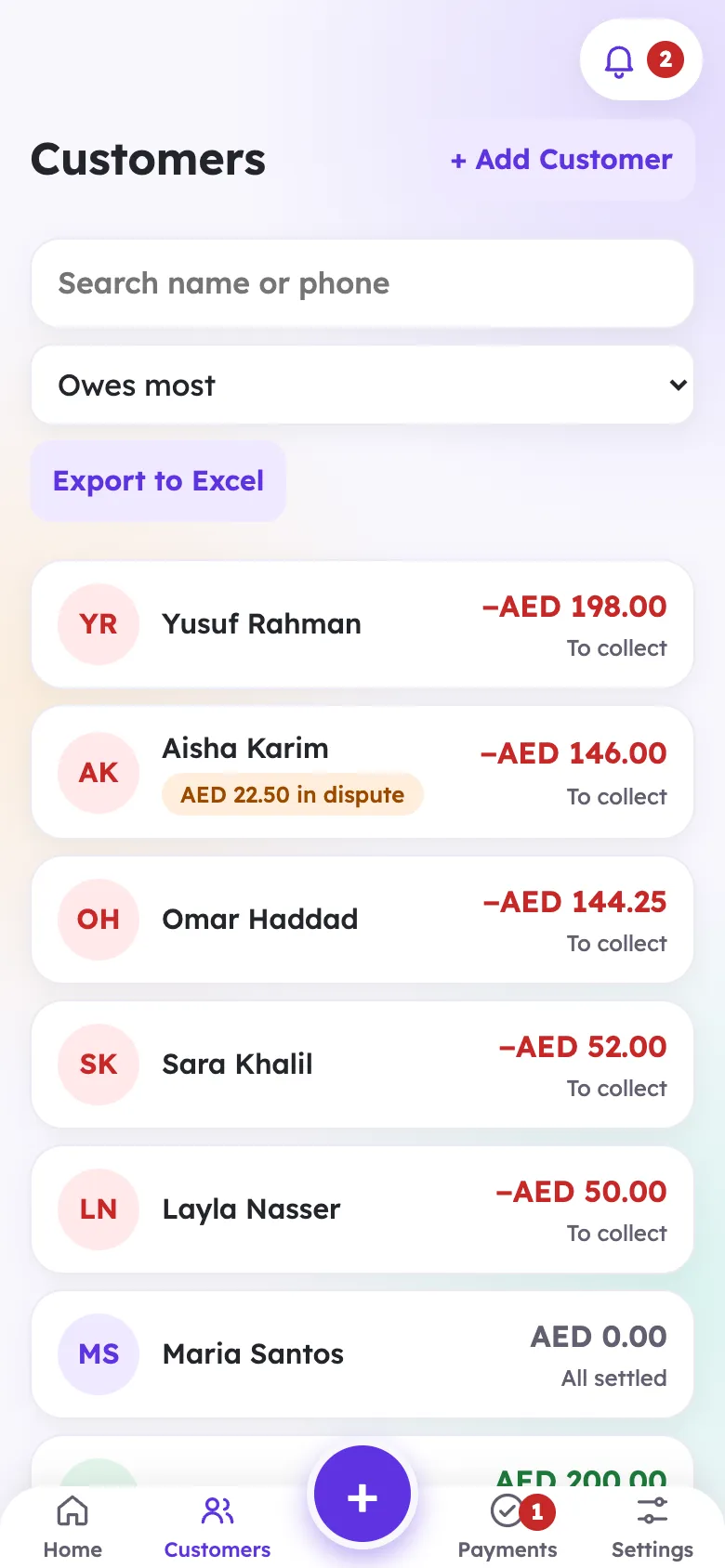
Jotbello is a record book. It shows what the shop and the customer agreed. Jotbello does not hold, send or move money, and it is not a bank or a lender.
Frequently asked questions
Is a paper khata still OK for a small shop?
For a handful of customers who never dispute anything, paper works. Once you have more customers, deliveries, or anyone else collecting goods, a shared app saves time and arguments.
What do I lose by moving to an app?
Very little: you still write each bill, just on the phone. You gain automatic totals, a record the customer can see, and history for every correction.
Put your credit notebook on Jotbello today
Free at launch. Add your first customer in under a minute, on your phone or computer.
- No card needed
- English, العربية and हिन्दी
- Works on any phone or computer